

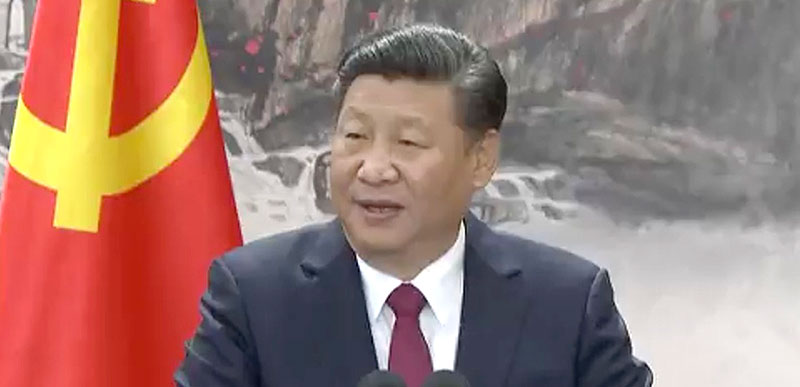

Last week Chinese President Xi announced that China would significantly cut tariffs on imported cars. Now they are announcing that they will begin phasing out even more barriers for foreign automakers:
ZEROHEDGE – Barely a week after Chinese President Xi Jinping mentioned easing barriers for foreign automotive firms during a widely publicized speech, China’s National Development and Reform Commission said Tuesday that it would phase out requirements that foreign auto makers must share factory ownership and earnings with local Chinese firms by 2022 – a step toward market liberalization that President Donald Trump will likely tout as evidence his aggressive trade policies are working.
The phase-out will unfurl in stages: Limits on foreign investment for companies building new energy vehicles, a term covering electric cars powered by batteries or fuel cells, will be removed this year. Limits on those building commercial vehicles and passenger cars will be lifted in 2020 and 2022, respectively.
In five years, the commission says, no foreign car company will need to have a joint venture with a Chinese firm, which would sunset a restriction on the industry that has been in place since 1994.
Presently, China forces foreign car makers to set up 50-50 joint ventures with Chinese partners if they want to produce cars locally. Meanwhile, imported cars get hit with a 25% tariff, per the Wall Street Journal. Chinese Vice Premier Liu He – considered the country’s economy czar – mentioned that China was planning to lower barriers for foreign firms, including automakers.
Of course, it will take years for the impact of this decision to be felt by US car manufacturers – and even then, benefits could be meager. However, the decision is widely seen as a boon for Tesla – with Quartz claiming that China “just rolled out the welcome mat” for Tesla.
If they end up killing these forced partnerships, which in some cases force the sharing of technology with potential competitors, as well as cutting auto import tariffs, then foreign automakers will surely be importing many more cars to China. It would be good for jobs here to have more fair trade with China, especially in the auto industry.
Assuming they end up following through with all of this.