


MAJOR UPDATE: President Trump says this is NOT true:
–EARLIER REPORTING–
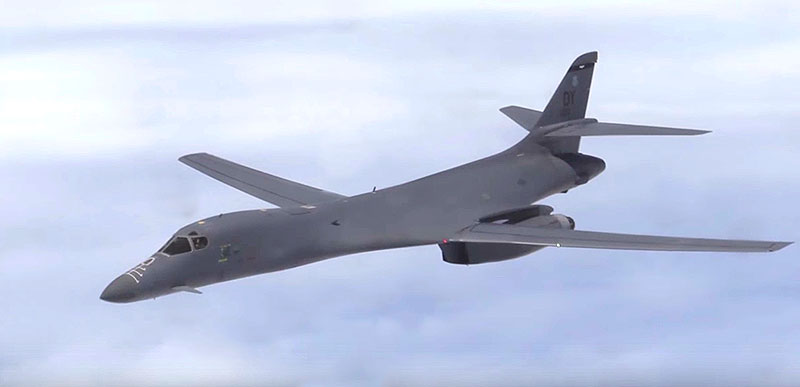
It’s being reported that President Trump and War Secretary Hegseth have positioned two B-1 bombers near Venezuela, sending a strong message that the US is getting ready to take out drug cartel assets in the country unless Venezuela stops sending drugs to the US.
This is part of a broader military ramp-up, which includes a lot of major assets being moved to the region, and it isn’t just a message for Venezuela, but also Colombia.
Here’s more from WSJ:
The U.S. flew Air Force B-1 bombers near Venezuela on Thursday, stepping up pressure on President Nicolás Maduro only days after other American warplanes carried out an “attack demonstration” near the South American country.
Two B-1 Lancers took off from Dyess Air Force Base in Texas on Thursday and flew near Venezuela, though they remained in international airspace, according to a U.S. official and flight tracking data.
The B-1 can fly at supersonic speeds and carry 75,000 lbs. of bombs, more than other U.S. bombers. They can also conduct maritime surveillance. The aircraft haven’t been moved to bases in the region, as they have the range to reach anywhere in the Caribbean from the U.S., according to a defense official.
Last week, the Air Force and Marines conducted a similar show of force with B-52 bombers and F-35B jet fighters near an island off the coast of Venezuela where its military held training exercises in September. The bombers circled the area before returning to the U.S., according to flight tracking data. The Pentagon described the flights as an “attack demonstration.”
The bomber flights are part of a broad military ramp-up, which includes eight warships, a submarine, a P-8 maritime patrol aircraft, MQ-9 Reaper drones and an F-35 fighter squadron now in the region
The U.S. has seldom flown bombers near South America in recent decades, usually carrying out just one planned training mission a year. But more missions involving bombers could be carried out soon, according to two defense officials.
Thursday’s flights signal “seriousness and intent,” said David Deptula, a retired Air Force general and Dean of the Mitchell Institute for Aerospace Studies, an aerospace think tank. “You’re bringing an enormous set of capabilities…endurance, payload, range and precision,” he said.