

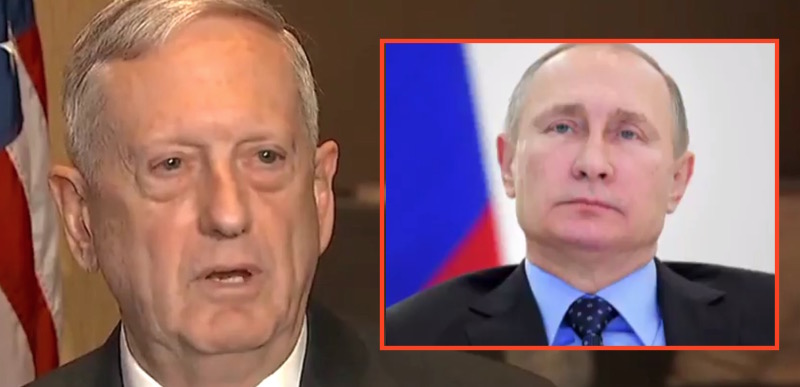

The U.S. is basically sayin, ‘nah bro,’ to Russia’s “de-escalation zone” that they have declared in Syria.
A State Department official on Friday said that the Russian proposal calling to bar U.S. military aircrafts from flying over designated safe zones cannot “limit” the U.S.’s mission against ISIS in the country in any way.
“The coalition will continue to strike ISIS targets in Syria,” the official told The Wall Street Journal. “The campaign to defeat ISIS will continue at the same relentless pace as it is proceeding now.”
A deal hammered out by Russia, Turkey and Iran to set up “de-escalation zones” in mostly opposition-held parts of Syria went into effect Saturday.
The plan is the latest international attempt to reduce violence in the war-ravaged country, and is the first to envisage armed foreign monitors on the ground in Syria. The United States is not party to the agreement and the Syrian rivals have not signed on to the deal. The armed opposition, instead, was highly critical of the proposal, saying it lacks legitimacy.
I mean, you can’t negotiate a non-aggression zone when the largest aggressor isn’t a party to it, right? That’s just kinda silly. But this manifests the multitude of various motivations for each party involved, and how difficult it is to get a clear picture of all the actors in Syria.
The Pentagon said the de-escalation agreement would not affect the U.S.-led air campaign against IS.
“The coalition will continue to target ISIS wherever they operate to ensure they have no sanctuary,” said Pentagon spokesman Marine Maj. Adrian J.T. Rankine-Galloway. ISIS is an alternative acronym for the Sunni militant group.
Rudskoi also suggested that Syrian government forces, freed up as a result of the safe areas, could be rerouted to fight against IS in the central and eastern part of Syria.
So what will happen if the U.S. and Russia cross the streams in a de-escalation zone? Hmmmm….